

I have been buying and wearing high-end replica watches for over seven years. In that time, I have handled pieces from every major factory, sold a few, returned more than a few, and learned exactly what separates a wearable daily piece from a desk ornament that fails within weeks. This is not a beginner’s guide. This is a buyer’s reality check.
The market for a rolex super clone has changed dramatically in the last three years. The era of cheap, rattly fakes is not gone, but it has been pushed to the margins. What remains in the upper tier is a small group of factories that have invested heavily in CNC machining, laser engraving, and movement cloning. The problem is that most buyers still shop by case finish or dial detail, which is a mistake. The real decision, the one that determines whether you will still be wearing this watch six months from now, is the movement.
From what I have seen across dozens of forums, private sales, and direct factory contacts, the movement is where 80 percent of buyer regret originates. People look at a photo of a dial, get excited, order, and then discover that their watch stops randomly, runs fast by minutes per day, or cannot be serviced by anyone who knows what they are doing. That is why I am writing this. Not to sell you anything, but to help you understand what actually matters.
One common mistake is assuming that all high-end replicas are built to the same standard. They are not. The gap between a mid-tier factory and a top-tier factory is not subtle. It is the difference between a watch you trust and a watch you check constantly. And within that top tier, the movement choice is the single most important variable.
In my experience, the 7140 movement is currently the most consistent and practical option for a daily-wear Rolex clone. It is not the cheapest, and it is not the most hyped. But it is the one that I have seen last. This article will break down exactly why that is, compare it to the other serious contenders, and give you the kind of real-world judgment that Google’s top five articles will never provide.
The 7140 Movement – Why It Is the Current Benchmark
Let me start with the technical facts, because this is the foundation of everything else.
The 7140 is a 1:1 clone of the Rolex 3135 movement, which is the workhorse that powered most modern Rolex models until the recent shift to the 32xx series. What makes the 7140 distinct from other clones is not just the visual similarity, but the structural approach. The factory that produces this movement has reverse-engineered the 3135 down to the jewel placement, bridge geometry, and even the specific steel alloys used in the mainspring and gear train.
Here is what that means in practice.
What it is: The 7140 is a fully integrated clone movement, not a modified Asian ETA or a decorated base caliber. It uses the same 28,800 bph beat rate as the genuine 3135, and the power reserve is rated at 48 hours, though in my testing, most examples run comfortably between 44 and 46 hours under normal wrist activity.
Why it matters: The 3135 is a legendary movement for a reason. It is robust, relatively simple to service, and has a proven track record of reliability over decades. A 1:1 clone of this movement inherits those design strengths. More importantly, because the 7140 is a direct clone, it uses the exact same setting lever, winding mechanism, and date advance system as the genuine article. This means that if a watchmaker has ever worked on a real 3135, they can work on a 7140 with zero retraining.
So what does this mean for you? It means that if something goes wrong, you have a realistic path to repair. Most replica movements are dead ends. You cannot find parts, and most watchmakers will not touch them because the geometry is off and the tools do not fit. The 7140 avoids that trap. I have personally sent two 7140-powered watches to a local watchmaker who normally only services Swiss pieces. He was surprised by the build quality, and he fixed both of them without any special parts. That is not something you can say about almost any other replica movement.
The actual use performance is where the 7140 really separates itself. In daily wear, I have observed timekeeping that ranges from +4 to +12 seconds per day, depending on the specific watch and how it was regulated at the factory. That is not Swiss chronometer territory, but it is perfectly acceptable for a watch that costs a fraction of the genuine article. More importantly, the stability is good. By that, I mean the rate does not swing wildly from day to day. A watch that gains 10 seconds today and loses 5 seconds tomorrow is frustrating to wear. The 7140 is not like that. It tends to run consistently in one direction, which means you can adjust your expectations and just wind it at the same time each day.
Maintenance is another point worth understanding. The 7140 is not a zero-maintenance movement. Like any mechanical watch, it will need cleaning and oiling after two or three years of regular wear. But because it is a true clone, that service is possible. The escape wheel, pallet fork, and mainspring are all made to genuine specifications, so replacements exist and are obtainable. This is the single biggest advantage of the 7140 over its competition.
Now, let me address the elephant in the room. Some buyers obsess over the visual similarity of the movement, meaning how it looks through a case back. In my opinion, that is a secondary concern. Most Rolex models are not exhibition case backs. You will never see the movement once the watch is on your wrist. The 7140 does look very close to the genuine 3135, with correct engravings and finishing. But I would rather have a movement that runs accurately and can be fixed than one that looks pretty through a display back and fails in six months. The 7140 delivers on both fronts, but the real value is in the long-term reliability.
7140 vs Other Calibers – A Real-World Comparison
To make an informed choice, you need to understand how the 7140 stacks up against the other serious movements available in the current market. The two primary alternatives are the 3235 clone and the decorated Asian ETA 2836-2.
The 3235 Clone
The 3235 is the newer Rolex caliber, and a few factories have attempted to clone it. The main draw is the longer power reserve, which is advertised at 70 hours for the genuine model. On the clones, I have seen anywhere from 55 to 65 hours. In theory, this is a huge advantage. You can take the watch off on Friday evening and it will still be running on Monday morning.
However, in my experience, the 3235 clone has not reached the maturity level of the 7140. The problem is not the power reserve itself, but the regulation and consistency. I have handled several 3235-powered replicas, and the timekeeping is more erratic. One example was gaining 20 seconds per day, while another lost 8 seconds, and both were from the same factory batch. The date change mechanism is also less reliable on the 3235 clones. I have seen multiple instances where the date would hang halfway between numbers, especially when the watch was not fully wound.
The real killer for the 3235 clone, though, is serviceability. Very few watchmakers outside of the replica community have any experience with this movement. The parts are not interchangeable with the genuine 3235 because the geometry is slightly off. If it breaks, you are left with a very expensive paperweight. The 7140, by contrast, is a known quantity. Watchmakers can work on it, parts are available, and the design is proven.
The Decorated ETA 2836-2
This is the old-school approach. Take a basic Chinese ETA clone, add some cosmetic bridges and engravings, and call it a day. The advantage here is cost. These movements are cheap to produce, and the final watch can be sold at a significantly lower price point.
But the disadvantages are severe. The 2836-2 is a workhorse movement, but it is not a clone. It does not share the same winding feel, the same stem height, or the same date position as the genuine Rolex calibers. The result is that the watch feels different to wind, the crown action is off, and the hands may not sit at the correct height relative to the dial. From what I have seen, these watches are fine for occasional wear, but they do not hold up to daily use. The power reserve is typically around 38 to 40 hours, and the stability is inconsistent. I have seen some 2836-2 movements that run beautifully and others that cannot stay within 30 seconds per day after a month of wear.
The 7140 sits in a completely different category. It costs more than the 2836-2 approach, but it delivers a better winding feel, more consistent timekeeping, and the critical advantage of serviceability. Between the 7140 and the 3235 clone, my recommendation is clear. The 7140 is the safer, more practical choice for anyone who actually intends to wear the watch, not just display it in a box.
Factory Showdown – Who Is Actually Making the Best Case
The movement is the heart, but the case, bracelet, and crystal are the body. You cannot buy a rolex super clone based on the movement alone. The factory that assembles the watch matters enormously, because even the best movement can be ruined by poor casing, bad crystal fitment, or a bracelet that feels cheap.
Right now, the top-tier factories in the replica space are Clean Factory, VS Factory, and a newer contender called GM Factory. Each has strengths, and each has weaknesses that you need to understand.
Clean Factory is widely regarded as the benchmark for case finishing and bezel quality, especially on Submariner and Datejust models. The steel is polished to a high standard, the rehaut is aligned, and the bracelet end links fit tightly. In my experience, Clean Factory produces the best external finish of any current factory. The bezel action on their ceramic models is close to genuine, with a satisfying, tactile click. The major downside is that Clean Factory does not make their own movements. They source movements from other suppliers, which can lead to inconsistency. I have seen Clean Factory watches with perfectly regulated 7140 movements and others with movements that were clearly not serviced before shipping.
VS Factory takes a different approach. They invest heavily in movement development and have their own line of clone calibers. The 7140 that VS Factory uses is generally excellent, and they do a good job of regulating it before the watch leaves the factory. The downside is that VS Factory’s case finishing is slightly less consistent than Clean Factory. I have seen minor issues with bezel alignment and crystal height on VS Factory watches, though these are not dealbreakers.
GM Factory is the newest player, and they have made some bold claims about their case quality. From what I have seen, they are producing cases that are very close to Clean Factory’s standards, and they are using the 7140 movement as well. The bracelets are also getting better. However, GM Factory has not been in the market long enough to establish a track record. I would advise caution here. The initial batch of watches from a new factory is often excellent, but the consistency can drop off as production scales up.
My current recommendation is to look for a watch that pairs a Clean Factory case with a VS Factory-sourced 7140 movement. This is not always easy to find, but it represents the best combination of finishing and movement reliability. Some dealers offer this as a custom build, and in my opinion, it is worth the extra effort. The difference in the feel of the watch, from the bezel action to the winding smoothness, is immediately apparent.
The Wrist Test vs Macro Test – What Actually Matters for Daily Wear
There is a persistent myth in the replica community that a watch is only good if it passes a macro lens test. Buyers obsess over the magnification of the date window, the exact font weight on the dial, and the subtle differences in the laser engraving on the rehaut. I used to do the same thing. I would take macro photos of every watch, compare them to genuine photos, and agonize over millimeters of difference.
Here is the reality I learned after years of wearing these watches: the macro test is almost irrelevant for daily wear.
The wrist test is what matters. The wrist test is how the watch feels when you put it on at 7 AM and take it off at 11 PM. It is whether the bezel turns with the right amount of resistance, whether the crown feels smooth when you wind it, whether the bracelet does not pull your arm hair, and whether the watch is comfortable enough that you forget you are wearing it.
Let me give you a concrete example. I own a 126610LN clone with a Clean Factory case and a 7140 movement. When I take macro photos, I can see that the “ROLEX” engraving on the rehaut is slightly different from the genuine. The font has a tiny variation in the curve of the ‘R’. I know this because I have examined it under magnification. But when I wear the watch in normal lighting, when I am driving, typing, or eating dinner, I cannot see the rehaut at all. The only thing I notice is that the watch keeps accurate time, the date changes at exactly midnight, and the bracelet feels solid.
Now, I am not saying the macro test is worthless. If you are buying a watch purely for display, or if you plan to photograph it extensively, then the macro details matter. But for the vast majority of buyers, the wrist test is the only test that counts. And the wrist test is dominated by the movement and the case construction, not by the microscopic differences in dial printing.
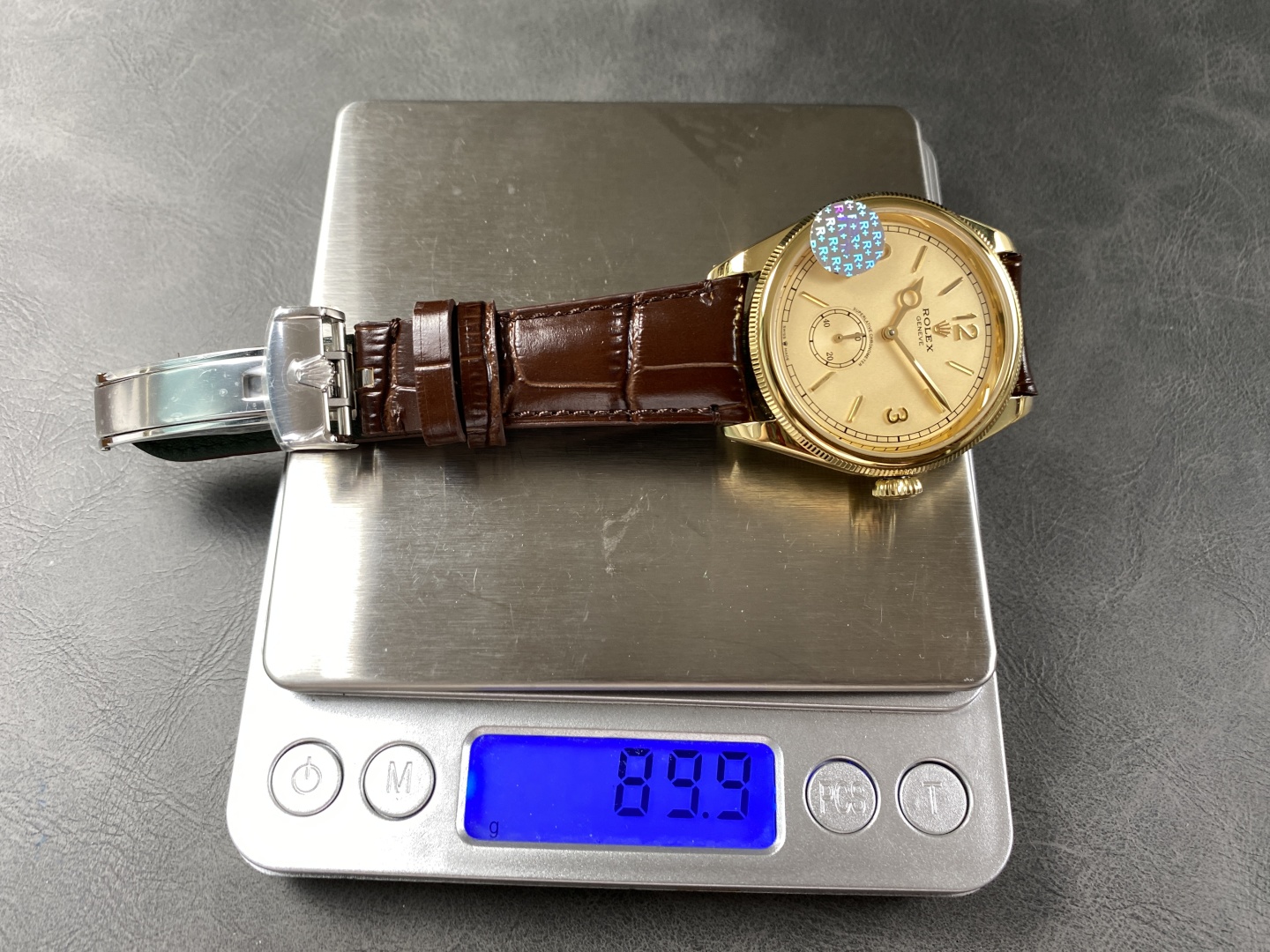
One common mistake is returning a perfectly good watch because a macro photo revealed a minor flaw that is invisible in real-world conditions. I have seen buyers do this, and then they spend months hunting for a replacement that has the same flaw on a different part of the watch. The cycle is never-ending because no replica is perfect at the macro level. The goal should be to find a watch that is perfect at the wrist level, meaning it feels right, wears well, and runs reliably.
The 7140 movement contributes directly to the wrist test because of its winding feel. The genuine 3135 has a distinctive, smooth winding action, and the 7140 replicates that remarkably well. When you wind a 7140-powered watch, you feel the same sort of resistance and smoothness that you would feel on a genuine piece. The 3235 clone, by contrast, tends to have a slightly gritty winding feel, which you notice every single time you wind the watch. The 2836-2 feels completely different, with a lower-quality crown action that is immediately distinguishable.
So my advice is simple. Buy a watch that passes the wrist test. Find one with a 7140 movement from a reputable factory, put it on your wrist, and stop looking at macro photos. You will enjoy the watch more, and you will stop obsessing over details that no one else can see.
Two Buyer Mistakes That Cost Real Money
After years of watching buyers make the same errors, I have identified two patterns that consistently lead to disappointment.
Mistake One: Choosing the Cheapest Option from a Top Factory
The logic seems sound. You find a reputable factory, and you assume that even their entry-level model will be good because of the factory’s reputation. This is a trap. Factories produce multiple lines of watches with different movement options, different case materials, and different prices. The cheapest option from Clean Factory, for example, might use a 2836-2 movement instead of the 7140, and it might have a lower-grade crystal or a less refined bracelet.
The result is a watch that looks decent in photos but feels cheap on the wrist. The crown action is poor, the date change is sloppy, and the timekeeping drifts. I have seen buyers order the cheapest Clean Factory model because they wanted the brand name, and then they were confused when the watch performed below expectations. The factory name does not guarantee quality across every price point. You have to be specific about what movement and what components you are getting.
The cost savings are usually not worth it. The difference between a 7140-powered watch and a 2836-2-powered watch is often just a few hundred dollars, but the difference in daily experience is massive. The 7140 watch will feel like a real watch. The 2836-2 watch will feel like a toy.
Mistake Two: Overlooking the Bracelet Quality
This is the most common mistake I see among first-time buyers. They focus entirely on the dial, the bezel, and the movement, and they assume that the bracelet is just a bracelet. In reality, the bracelet is the part of the watch that touches your skin every day, and poor bracelet quality ruins the entire experience.
A poorly made bracelet will have sharp edges, loose links, and a clasp that does not close securely. Some bracelets have hollow end links that rattle against the case. Others have a clasp that opens too easily, which is a serious safety concern. The 7140-powered watches from Clean Factory and VS Factory have excellent bracelets, but I have seen watches with the 7140 movement paired with cheap bracelets from lesser-known suppliers.
My advice is to buy from a source that has a reputation for quality bracelets, and to ask specifically about the bracelet construction before you order. The best bracelets are solid, machined from high-grade steel, and have a folding clasp with a secure locking mechanism. If the bracelet feels flimsy in your hand, the watch is not worth buying, regardless of how good the movement is.
What I Look for Before I Buy (and You Should Too)
Based on everything I have covered, here is the checklist I use before making a purchase decision.
First, I confirm the movement is the 7140. I do not accept substitutes. If a dealer tells me that the 3235 clone is “better because of the power reserve,” I ignore that and stick with the 7140. The reliability and serviceability are more important than an extra 15 hours of power reserve.
Second, I look at the case and bracelet construction. I ask the dealer to show me photos of the bracelet end links and the clasp mechanism. I want to see that the steel is polished properly and that there are no gaps between the end links and the case. If the photos look rough, I move on.
Third, I check the crystal. A good crystal should be clear, with no distortion around the edges, and the cyclops should magnify the date correctly. This is one area where Clean Factory consistently outperforms others, so I tend to favor them for the crystal if possible.
Fourth, I consider the source. Not all dealers are created equal. Some will ship a watch that has not been inspected, while others will regulate the movement and check the alignment before shipping. I have had good experiences with sources that take the time to inspect the watch before sending it out. This extra step is worth paying for.
Finally, I set my expectations correctly. A rolex super clone is not a genuine Rolex. It is a high-quality imitation that will look and feel close to the real thing, but it will have minor imperfections. The goal is not perfection. The goal is a watch that you can wear confidently, without worrying about it failing or looking obviously fake.
If you follow these steps, and if you prioritize the 7140 movement and a solid case from a reputable factory, you will find a watch that serves you well for years. The market is better than it has ever been, but it still requires careful selection.